
Orbis Exploration Route: Use the Map for Chests, Resources, and Objectives
Build a readable Orbis route from selected layers and searches, then connect locations to Adventure Book, quest, chest, monster, and resource work.
Current Orbis version
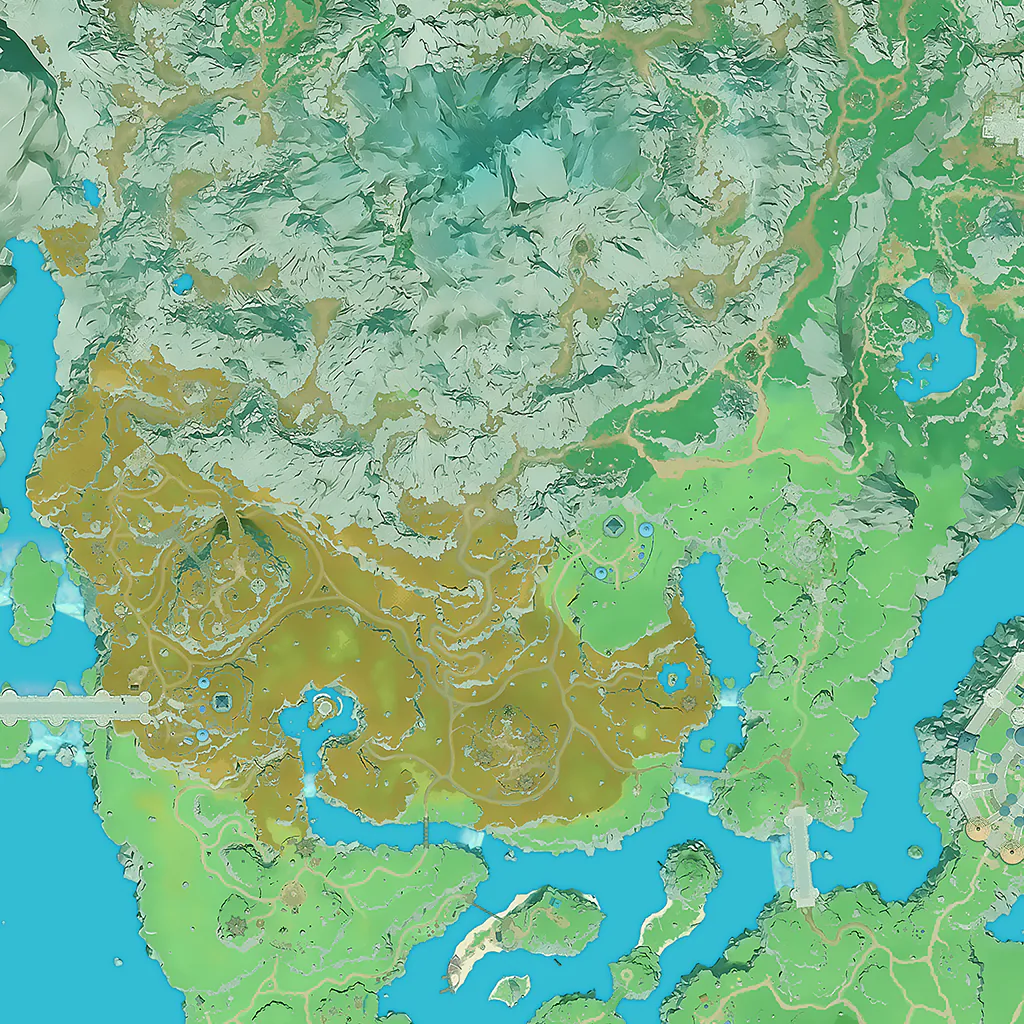
Read the map as layers, not as one picture
The Orbis map combines several kinds of information, and reading them all at once hides the useful parts. Separate the layers by question: quest objectives for the next story step, Adventure Book targets for completion, chests and viewpoints for exploration, and monsters for materials. The Orbis map /map supports layer selection and search, so a route starts by turning on only the layers the current goal needs.
The released world is Orbis, and the map data covers its regions with named locations and objectives. Preview areas that are not part of the current progression should stay out of a route, because a checklist that mixes released and unreleased content wastes travel time. Keep the route inside what the map actually shows as playable.
Build a route around a goal, then a region
A good route answers one question: where can I finish the most work in one trip? Start from the goal—three Adventure Book entries, a material shortage, a set of chests—then use search to pull the matching points onto the map, then group them by region. The Orbis map /map search and the Adventure Book /adventure-book list make the grouping visible without switching between pages.
The same region can serve several goals at once. A region with a chest cluster, a named monster, and a viewpoint turns one trip into three completions, and the route should be built around those overlaps. The quest database /quests adds the story steps that pass through the same region, so travel between main-story checkpoints and side work is combined rather than duplicated.
Connect chests, monsters, and viewpoints to their systems
The Adventure Book organizes Orbis completion into five sections: Named Monsters, Field Bosses, Treasure Chests, Familiars, and Viewpoints, with the chest and viewpoint sections making up most of the entries. Every entry records its location, its mission type, and the points it grants, and the book's rewards unlock at point thresholds. The Adventure Book /adventure-book shows the full list, and the Orbis map /map shows where each target sits, so exploration is completion-driven instead of aimless wandering.
Chest hunting pays twice: the chest itself and the Adventure Book points. The same is true for named monsters and viewpoints. When a route passes a chest cluster, opening every chest in the cluster is usually worth the detour because the entries group by region.
Route the material hunt through the same map
Material farming benefits from the same layering. The item database /items records the known sources for crafting and upgrade materials, and the map shows where those sources live. A material route is a map route: mark the sources for the shortage ledger, group them by region, and walk the regions in order of need. The material planner /material-planner provides the shortage ledger, and the map provides the route, so the two tools replace "farm wherever I remember".
When a source is not documented, the map still helps: the region and the enemy type are usually enough to test the drop in game, and the route should treat that as an in-game check rather than a planned yield.
Finish with a written route and one checkpoint
A practical session ends with a short written route: the region, the layers turned on, the targets in order, and the one goal that counts as success. On the next visit, the Orbis map /map restores the layers, the Adventure Book /adventure-book shows what is still missing, and the shows what is still missing, and the quest database /quests shows the next story step. Exploration becomes a habit with a plan instead of a detour, and the completion percentage stops being a mystery.
Plan the route around fast travel as well as around the targets. Two regions with three targets each are usually faster as two short trips with a waypoint hop than one long walk, and the map's fast travel points turn the route into a checklist of hops. Check the waypoint coverage in the Orbis map /map before setting out, and when a region lacks a waypoint, route it together with the story step that opens the area, so the walking happens once instead of twice.