
Cooking
Cooking Recipes
Browse each dish once, then compare its valid ingredient combinations, required items, and quality results.

Assorted Grilled Fish
Effects by quality
Normal[Personal] Instantly restores 21% of maximum HP.Legendary[Personal] Instantly restores 60% of maximum HP.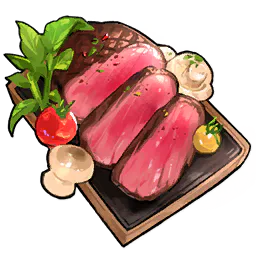
Assorted Grilled Meats
Effects by quality
Normal[Personal] Instantly restores 1200 HP.Legendary[Personal] Immediately restores 3300 HP.
Assorted Rice Bowls
Effects by quality
No gameplay effect is listed for this dish.
Assorted Salad
Effects by quality
Normal[Team] Immediately removes all status effects.Legendary[Team] Immediately removes all status effects.
Assorted Sashimi
Effects by quality
No gameplay effect is listed for this dish.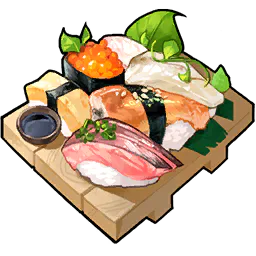
Assorted Sushi
Effects by quality
No gameplay effect is listed for this dish.
Beef Tartare
Effects by quality
No gameplay effect is listed for this dish.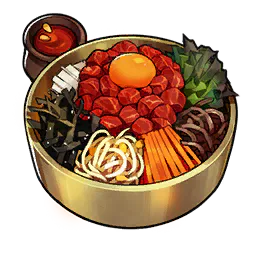
Beef Tartare Bibimbap
Effects by quality
No gameplay effect is listed for this dish.
Carpaccio
Effects by quality
No gameplay effect is listed for this dish.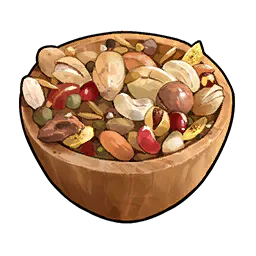
Cereal
Effects by quality
Normal[Team] Increases Rage gained from attacks by 10% for 1 minute.Legendary[Team] For 1 minute, Rage gained from attacks is increased by 25%.Cooking database guide
How recipes, ingredient categories, and quality outputs work
Use the cooking database to find a dish, compare every valid formula, identify which slots accept a category, and follow exact ingredients back to their item sources.
Start with the dish, not the raw formula count
The cooking database lists 73 distinct dishes but 1,025 valid ingredient combinations. Those numbers answer different questions. A dish is the result a player searches for, such as a grilled meal, soup, or sliced preparation. A combination is one permitted way to satisfy that dish’s ingredient conditions. The recipe list therefore shows every dish once and keeps its alternatives on the detail page. This avoids a long wall of identical output names while keeping the available alternatives intact. Search by dish or ingredient, filter by cooking tool, choose one or more ingredient conditions, and use the slot filter when you want a preparation with a specific number of inputs.
A high combination count does not mean that a dish has been duplicated or that every row produces a different effect. It means the listed recipe table permits several category arrangements or exact ingredients for the same five quality outputs. Open the dish before deciding that two combinations are interchangeable, because repeated category slots, mixed categories, and named ingredients are separate requirements.
Read category slots and exact ingredients differently
A category condition accepts any cooking ingredient that belongs to the named group. If a formula says Meat plus Vegetables, one valid meat item and one valid vegetable item satisfy those two slots. If Meat appears twice, two meat inputs are required; the repeated label is a quantity rule, not a duplicate display. The detail page links each category to the complete set of current ingredients that can fill it, so you can compare what you own without guessing from an item’s picture or English name.
A named ingredient is stricter. It must be used exactly unless another formula for the same dish lists a different condition. The interface marks exact ingredients separately and links directly to the item record. That item page can then show supported acquisition sources and every distinct dish that accepts it. Category matches and exact matches stay labeled, because an ingredient being broadly eligible as a Vegetable is not the same as a recipe explicitly requiring Aqualily.
Treat five qualities as one recipe family
Each listed cooking formula points to five quality versions for the same dish family, one for each quality tier. The recipe page groups those outputs into a single strip, and each quality links to its own item page where its exact name, description, category, quality, sources, and other relationships can be checked. The quality strip describes known output relationships only; it does not claim that a particular quality can be forced through an undocumented method.
The recipe table shows which outputs belong to the formula, but it does not explain how ingredient quality, timing, player skill, random rolls, or hidden conditions choose the final tier. Do not infer a guaranteed Legendary result merely because the Legendary item is listed in the family. When the game exposes a quality rule that can be reproduced, it can be modeled separately; until then, the database keeps known relationships and unknown selection mechanics distinct.
Use the item page to plan from what you already own
When you begin with a material rather than a desired dish, open its item page and use the Cooking recipes section. Matching results are grouped by dish: Aqualily, for example, can satisfy many formulas through its Vegetable category, but each resulting dish appears once. Every row also reports how many of that dish’s formulas accept the material, so you can judge the available alternatives without counting the same result more than once.
This direction is useful when clearing inventory or deciding whether a gathered ingredient has meaningful coverage. It is not an inventory optimizer and does not know your quantities automatically. Check the ingredient’s supported source, compare the formulas on each linked dish, and decide which alternative consumes resources you can replace. If a source resolves to an official map location, follow the map link; if the source is broad or missing, treat it as unknown rather than inventing a farming route.
Search the item databaseCheck ingredient locations
Choose a formula without wasting scarce ingredients
First select the dish and cooking tool you need. Next compare the formula rows at the same slot count. Prefer category inputs that you can replenish easily, but keep exact ingredients for recipes that truly require them. Repeated categories consume multiple inputs even when the interface compresses them into a single label with a multiplier. Before cooking in bulk, open any unfamiliar material to verify its identity and known sources, then confirm the live result and quantity in the current game.
The database is designed to support that decision without pretending to know account-specific inventory, random quality outcomes, event availability, or unlisted mechanics. Every current formula links to its item pages. After a game update, recheck the dish page before committing rare stock: a new formula, category match, or output relationship can change which alternative is cheapest even when the visible dish name stays the same.